

Overview of Analysis Capabilities
Prokon SUMO supports a comprehensive range of both static and dynamic analysis types, making it a versatile tool for structural engineers. The static analysis options include:
- Linear (Standard Linear-Elastic) – the most fundamental analysis type, used for elastic behavior within small deformation ranges.
- Second Order (Sway) – considers geometric nonlinearity, accounting for P-Δ effects in slender structures.
- Non-Linear – accommodates material and geometric nonlinearities, enabling a more realistic simulation of real-world behavior.
- Buckling (Eigen-Value) – evaluates the critical load at which structural instability may occur.
The dynamic analysis options extend SUMO’s capability further and include:
- Modal Analysis – determines natural frequencies and mode shapes of the structure.
- Seismic Analysis – evaluates the response of the structure under earthquake loading.
- Harmonic Analysis – investigates steady-state responses to cyclic or oscillatory loading conditions.
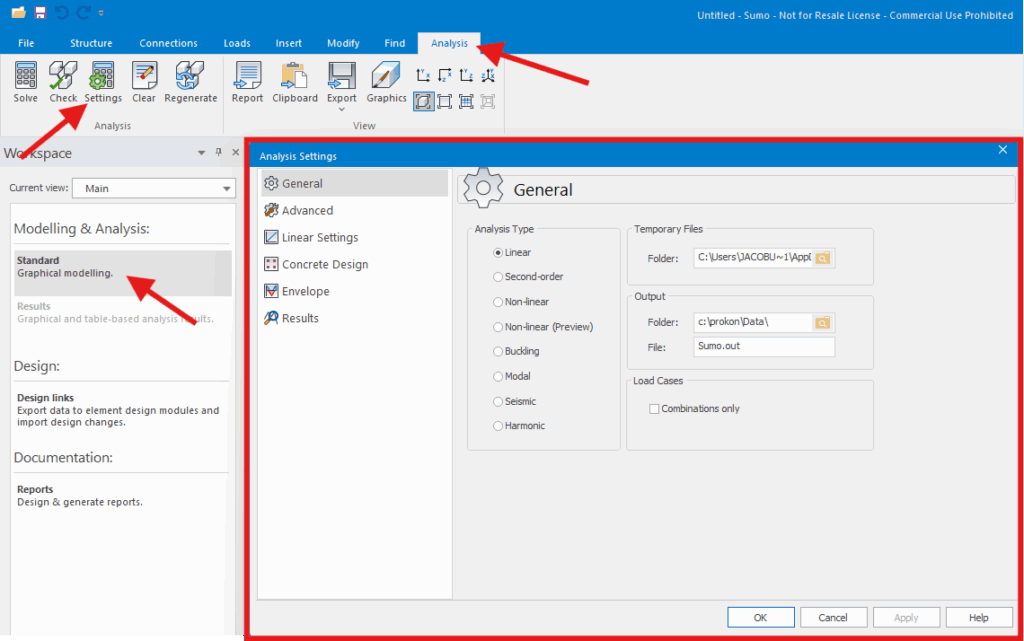
For most of these analysis types, users can customize their parameters and settings within the Analysis Settings window, accessible via the Analysis tab of the Standard workspace. This flexibility allows engineers to tailor the analytical model to match project-specific requirements.
Ongoing Improvements and Feature Enhancements
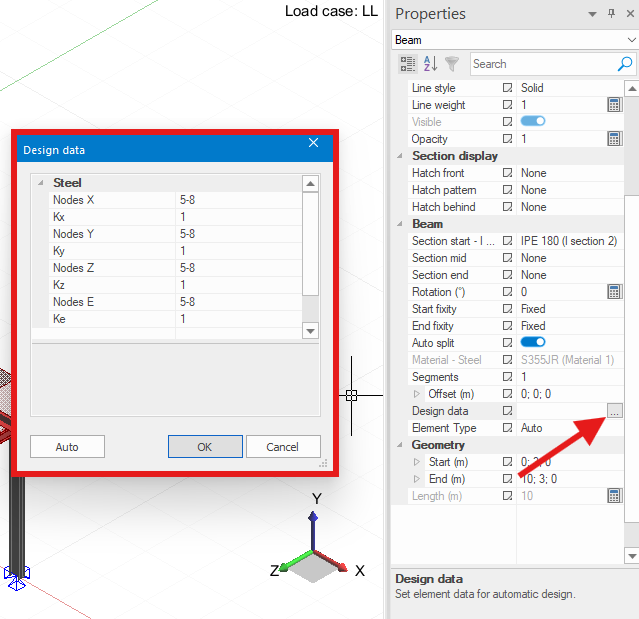
Prokon has been systematically enhancing SUMO’s capabilities, introducing new features to streamline design workflows. One of the notable updates is the ability to modify the Effective Length Factor (K-value) of a beam. This addition directly supports the Combine Design Group workflow (distinct from the Design Link workflow).
This new feature allows users to more accurately represent column or beam behavior between restraints, improving design precision. However, it is important to emphasize that these modifications do not affect the Buckling analysis results, nor do they influence the global analysis outcomes. Instead, they impact only the design evaluation of members grouped within the Combine Design Group feature.
For additional context and workflow guidance, engineers can refer to Prokon Know-How: SUMO’s Combine Design Group YouTube clip, which provides deeper insight into this enhancement.
Testing the Combine Design Group Workflow
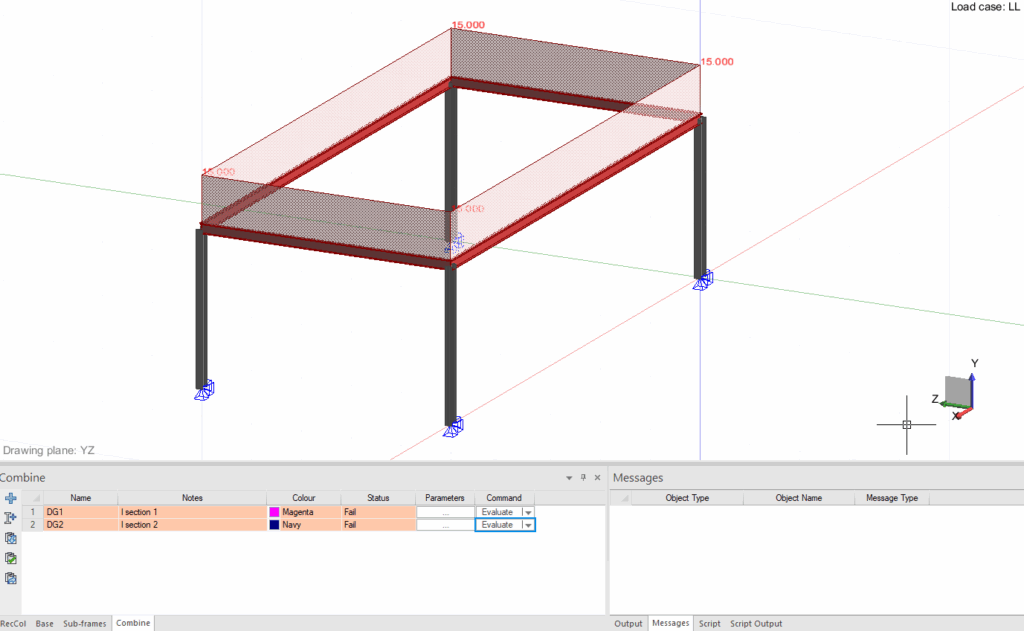
To evaluate the feature, the Design Data is left unchanged initially. Running an evaluation of the members using the Combine Design Group reveals that both design groups (DG1 and DG2) fail their design checks. In this example, the red IPE sections correspond to DG2, while the columns belong to DG1.
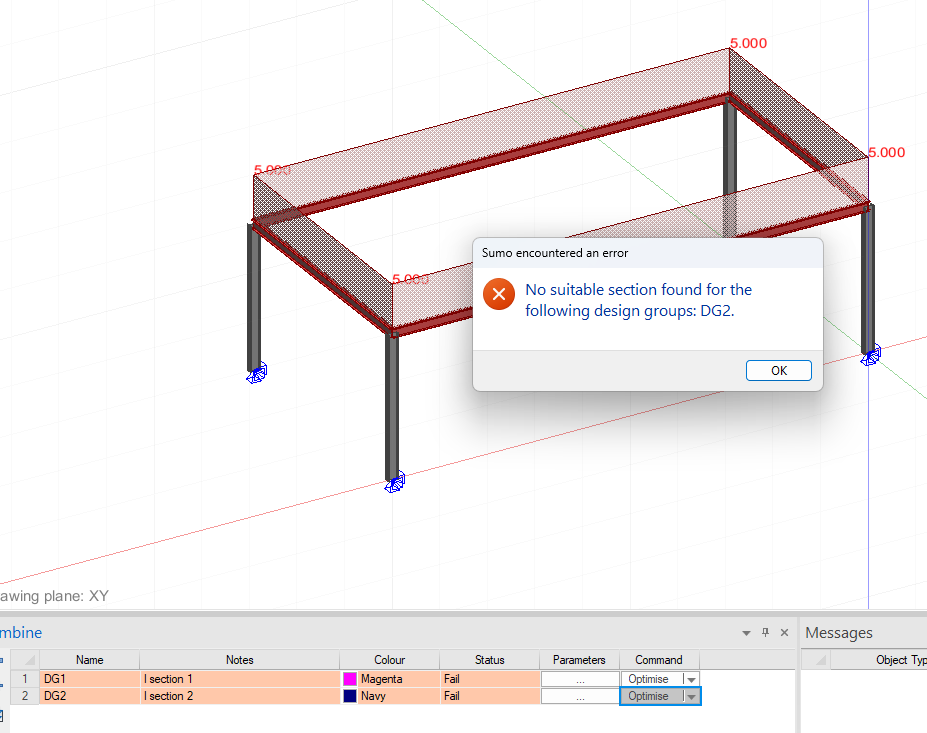
Without altering the Design Data, the next step involves executing the Optimize command. SUMO then proposes new member sizes that satisfy all design requirements. However, the default South African (SA) profile library may lack sufficiently large sections to meet the design criteria, resulting in an error message indicating that no suitable profile is available.
Refining Design Data and Optimizing Results
Adjusting the Design Data parameters and re-running the Optimize command yields improved results. SUMO is now able to select an upsized profile that meets all design checks, demonstrating the value of iterative refinement during the design process.
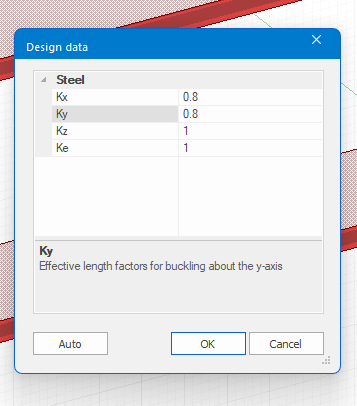
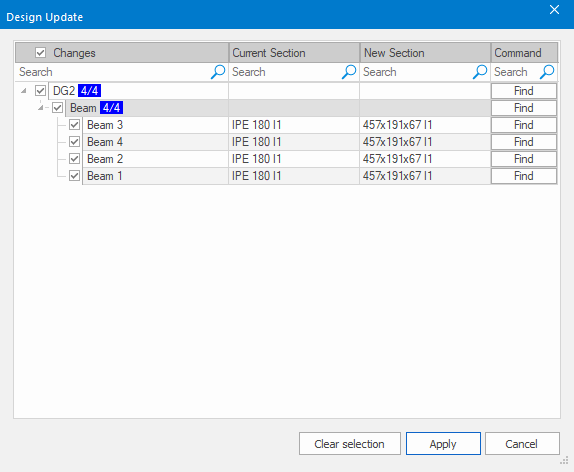
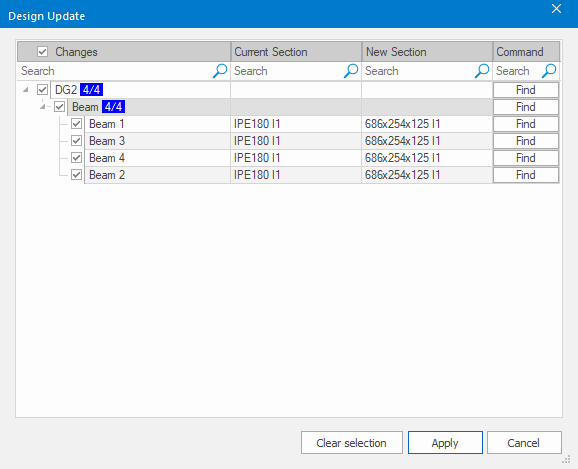
To further evaluate the workflow, the section database was switched to the British library, which includes a much broader range of larger steel profiles compared to the South African database. After resetting the Design Data to its default values and re-running the Optimize command, the results revealed that a significantly larger section successfully satisfied all design requirements. This outcome highlights how even a simple adjustment of the Effective Length factors can produce substantial differences in design results, emphasizing the importance of carefully defining these parameters to achieve accurate and efficient designs.
The Importance of Understanding Effective Length Factors
This seemingly small addition—the ability to modify the Effective Length Factor—has a significant impact on design outputs. It reinforces the importance of understanding how effective lengths influence member capacity and stability in steel design. Rather than being treated as an arbitrary or purely numerical input, the Effective Length Factor should be recognized as a critical design parameter.
