

Both modules cater to distinct structural needs, with Crane Beam focusing on dynamic loads and Girder Plate handling long-span static loads.
Crane Beam Design Module

Purpose:
- Used for designing beams that support overhead cranes, monorails, or gantry cranes.
- Accounts for moving loads, impact forces, lateral forces, and fatigue effects caused by crane operation.
Key Features:
- Considers dynamic loads from crane movements.
- Calculates vertical, horizontal, and impact loads.
- Evaluates deflection limits, especially for serviceability.
- Supports multiple crane configurations (single/double girder).
- Includes fatigue analysis due to repeated load cycles.
Application:
- Used in industrial buildings, warehouses, and manufacturing plants where crane systems are installed.
Girder Plate Design Module
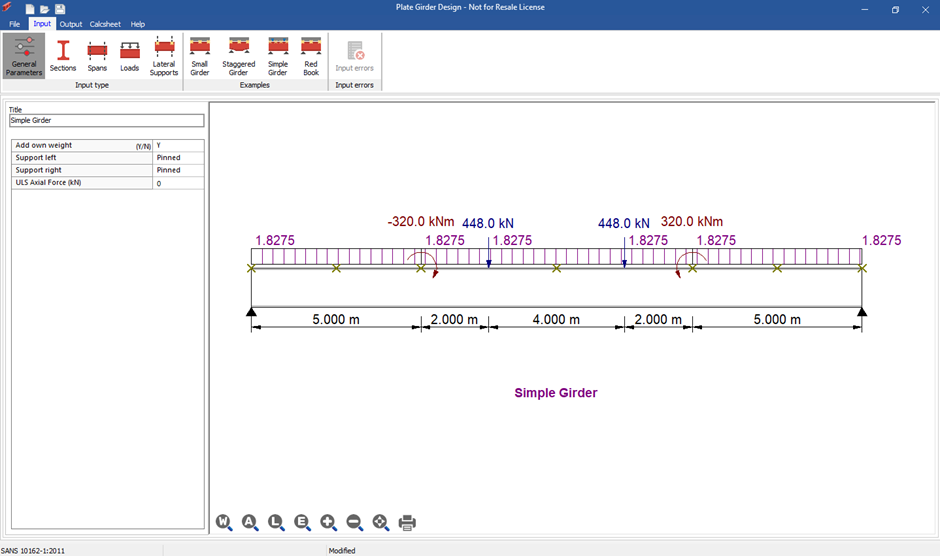
Purpose:
- Used for designing plate girders, which are large, built-up sections made from steel plates and stiffeners.
- Primarily used for long-span structures where standard rolled sections are insufficient.
Key Features:
- Allows customization of girder sections (flanges, web thickness, stiffeners).
- Checks bending, shear, and deflection.
- Supports buckling analysis for web and flange stability.
- Typically used for bridge girders, long-span roofs, and heavy industrial floors.
Application:
- Commonly used in bridges, stadiums, industrial buildings, and heavy-duty support structures.
Key Differences at a Glance
| Feature | Crane Beam Design Module | Girder Plate Design Module |
| Primary Function | Supports moving loads from cranes | Supports static loads in long-span structures |
| Material Efficiency | Uses standard sections | Built-up sections |
| Load Considerations | Accounts for dynamic, lateral, and impact forces | Focuses on bending, shear, and buckling |
| Fatigue Analysis | Yes (due to repeated crane operations) | Limited (fatigue effects are minimal for static loads). |
| Deflection Limits | Strict (to ensure crane rail alignment) | Moderate (depends on application) |
| Structural Type | Uses rolled sections (I-beams) or built-up sections | Uses built-up plate girders with stiffeners |
| Typical Applications | Industrial buildings, crane runways | Bridges, long-span roofs, heavy-duty platforms |
Conclusion:
- Select the Crane Beam module for structures subjected to repetitive crane loads, impact forces, and lateral stability concerns.
- Use the Girder Plate module for long-span, heavy-duty girders where buckling and shear stability are critical.
Was this helpful?
Thanks for your feedback!
